Documentaireserie Klassen
Documentaireserie Klassen startschot voor landelijk impactprogramma 6 januari 2021
In gesprek over oplossingen voor meer kansengelijkheid in het onderwijs
De veelgeprezen documentaireserie Klassen van omroep HUMAN geeft een gezicht aan de groeiende kansenongelijkheid in het onderwijs in Nederland. De serie, gemaakt door Sarah Sylbing en Ester Gould, maakt duidelijk dat het niet alleen anders kan, maar ook anders moet.
Klassen gaat het land in om met beleidsmakers en onderwijsprofessionals te werken aan het verbeteren van de onderwijskansen van elk kind. Fragmenten uit de serie dienen als startpunt voor gesprek. Wat is de lokale problematiek? Wat werkt er al goed en wat kan beter?… Read the rest
 HSN-34 kon niet plaatsvinden wegens de COVID-problematiek. Daarom organiseren we dit jaar een digitale conferentie.
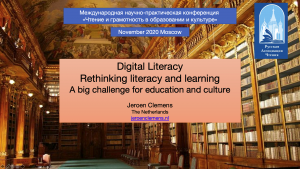 (Nederlands/English) Ik gaf een Keynote op de The 6th International Conference in Moskou. Reading and Literacy in Education and Culture: Letters in Digits van de
  Digital literacy asks for a change of the definition of literacy, an update of the necessary language skills and a new language curriculum to make education relevant and up to date.
 You are invited to submit a proposal to present at the 22nd European Conference on Literacy and the 44th Annual Conference of the Literacy Association of Ireland, to be held in Dublin on July 5-7, 2021.
 The 4th Baltic Sea Conference on Literacy “Searching for a Common Language” 16-21 January, 2020 in Tallinn, Estonia was a great success.
 Baltic Sea countries have much experience with multilingual education, communication and culture and are also facing new challenges for social coherence within increased immigration as other countries.…